
Sentinel Governance
Version: 4.0
Last Updated: August 7, 2026
Sentinel is the governance enforcement layer for MCOS. It is designed to place explicit controls between an agent request and a consequential action so governance can execute rather than remain a policy document.
1. No-bypass control hub
Sentinel is organized around six control capabilities:
| Capability | Purpose |
|---|---|
| Hard Gates | Block actions when required conditions are not met |
| MCP Tools | Expose governed tools through explicit interfaces |
| Deterministic Engine | Evaluate rules and calculations independently of model prose |
| SHA-256 Audit Chain | Preserve tamper-evident execution records where configured |
| Grounded Credit Math | Keep financial / credit calculations tied to explicit inputs |
| Policy Enforcement | Apply required approvals, permissions, and constraints |
2. Human on the loop
The approval doctrine is explicit:
REQUEST → APPROVE → ISSUE CLEARANCE
A request that needs human authority remains PENDING APPROVAL until the required approver clears it. The agent does not silently route around the gate.
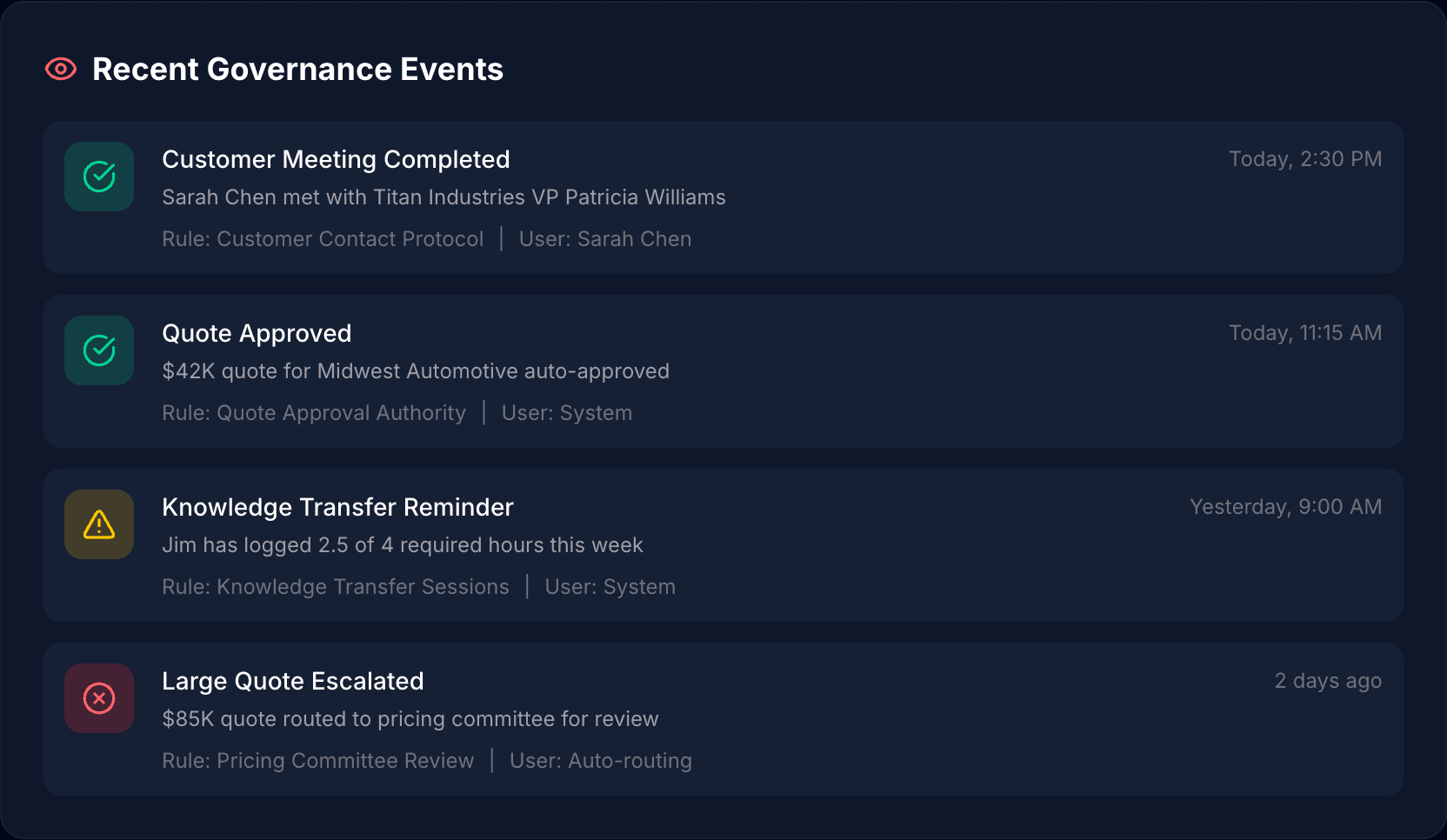
3. Governance events
A useful governance record captures:
4. Hard gates
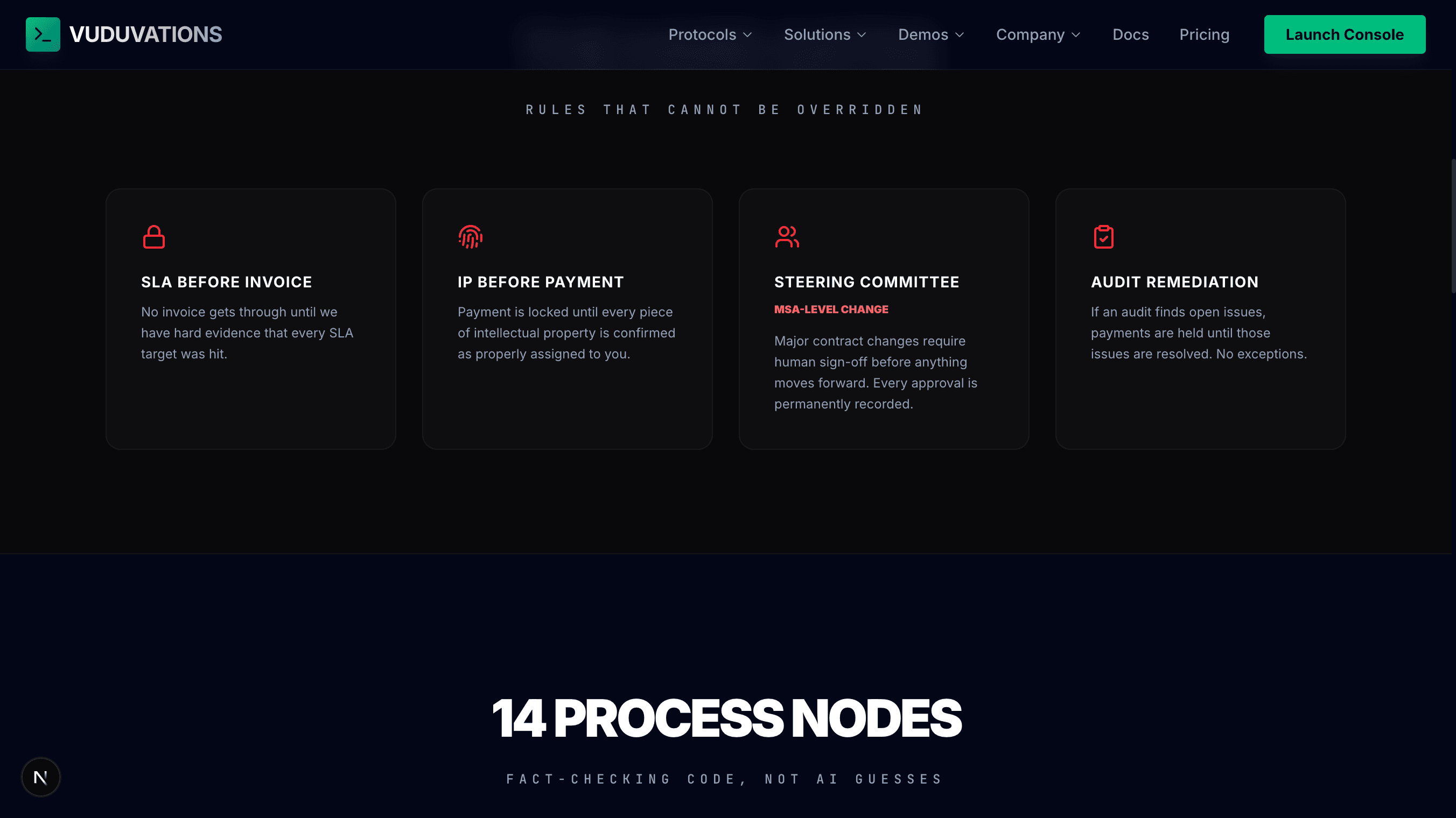
Hard gates are appropriate for conditions that should stop execution rather than merely produce a warning.
Examples can include:
5. Multiple agent stacks
Sentinel is intended to sit above heterogeneous agent implementations rather than require a single model or framework. The operating goal is one governance layer across multiple agent stacks.
6. Deployment postures
Supported design postures are described as:
The exact security, compliance, and hosting posture depends on the deployment and does not imply a certification simply because the architecture supports the control pattern.
7. Institutional memory
Governance decisions can write back into the operating record: what was requested, why it was approved or blocked, and which policy version governed the decision.
That history is more useful than a generated explanation because it preserves the actual evidence and execution state.
Need help? Contact [email protected].