
AI Discovery
Version: 4.0
Last Updated: August 7, 2026
AI Discovery turns one executive conversation or source package into a source-grounded AI opportunity and readiness assessment. Financial outputs should come from the company's people and documents—not invented industry benchmarks.
1. Inputs
Start with one conversation or source package:
The protocol does not require a separate market-benchmark input to manufacture financial value.
2. Executive assessment
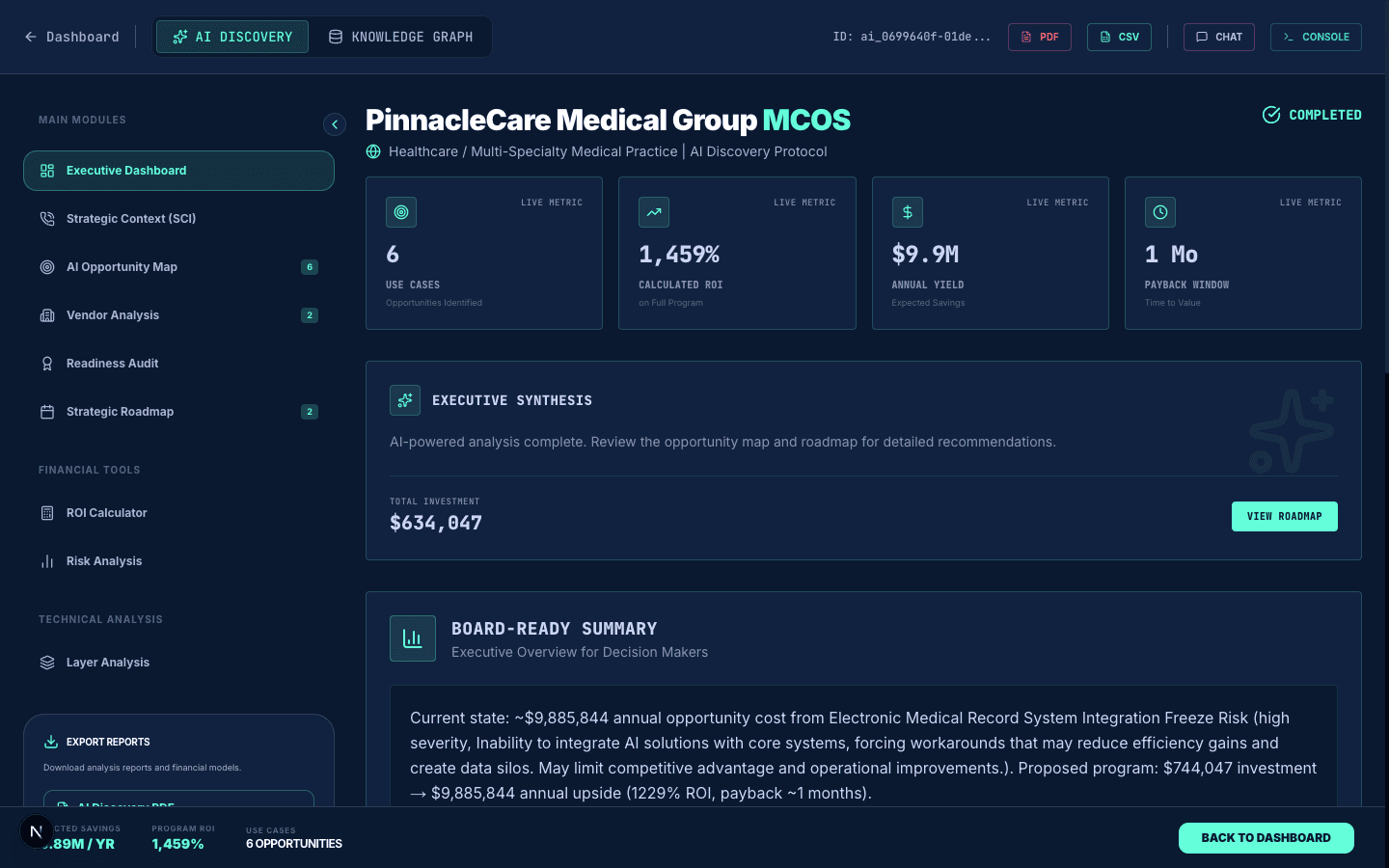
The analysis is delivered as an eight-module working assessment covering the executive picture, quantified pain, opportunities, stakeholders, risk, readiness, financial logic, and roadmap.
3. AI readiness
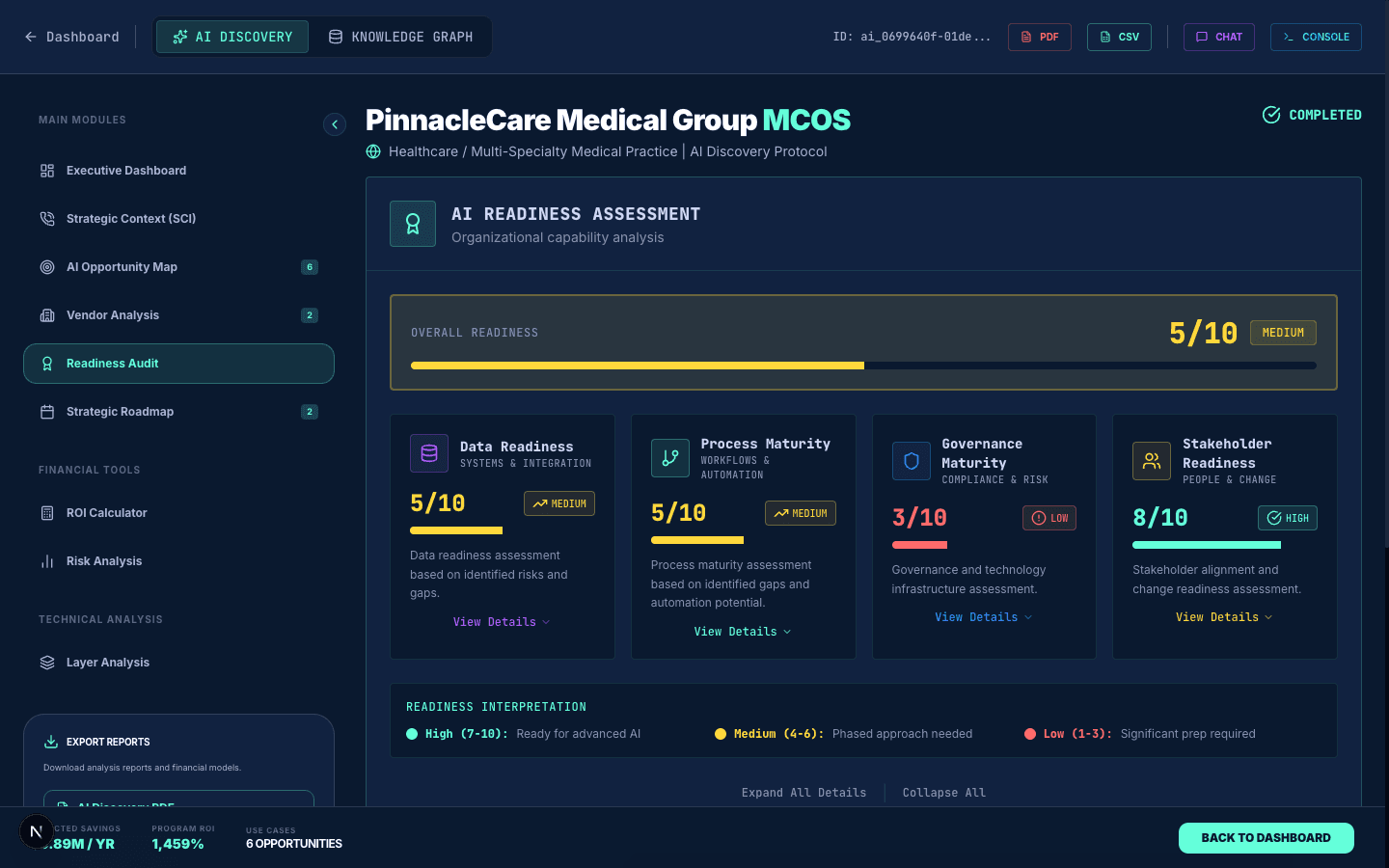
Readiness is evaluated across four dimensions:
| Dimension | What it asks |
|---|---|
| Data | Is the required data available, usable, and governed? |
| Process | Is the workflow stable enough to automate or augment? |
| Governance | Are policy, approval, risk, and accountability controls defined? |
| People | Are ownership, adoption, and operating roles clear? |
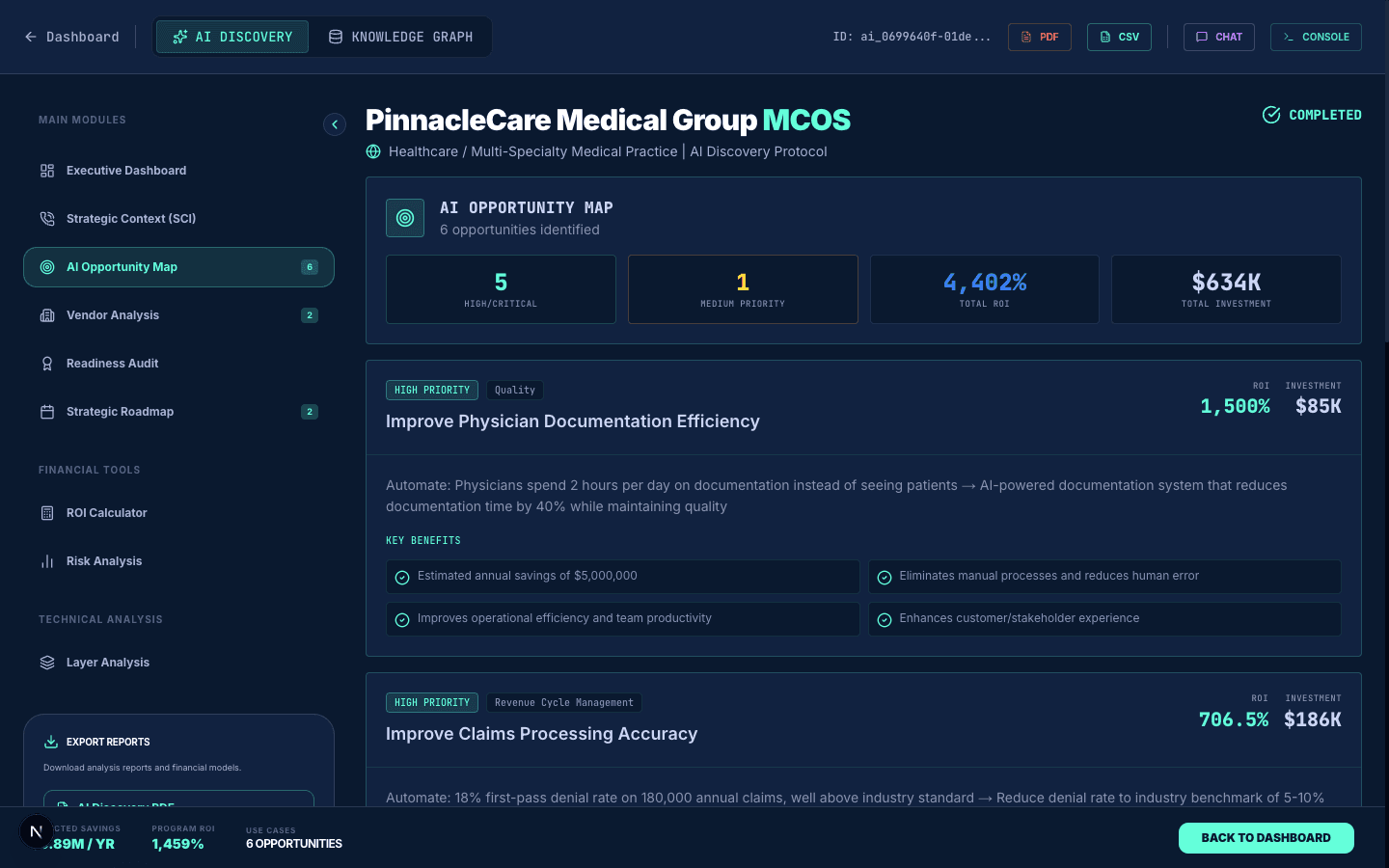
4. Opportunity map
Opportunities should be ranked from source-grounded pain and operating evidence. Each high-value use case should preserve:
5. Financial model
Financial Truth uses company-stated figures and explicit calculations. Do not substitute unsourced industry averages for missing company data.
If the source does not support a number, the workspace should show the gap rather than inventing one.
6. Risk and governance
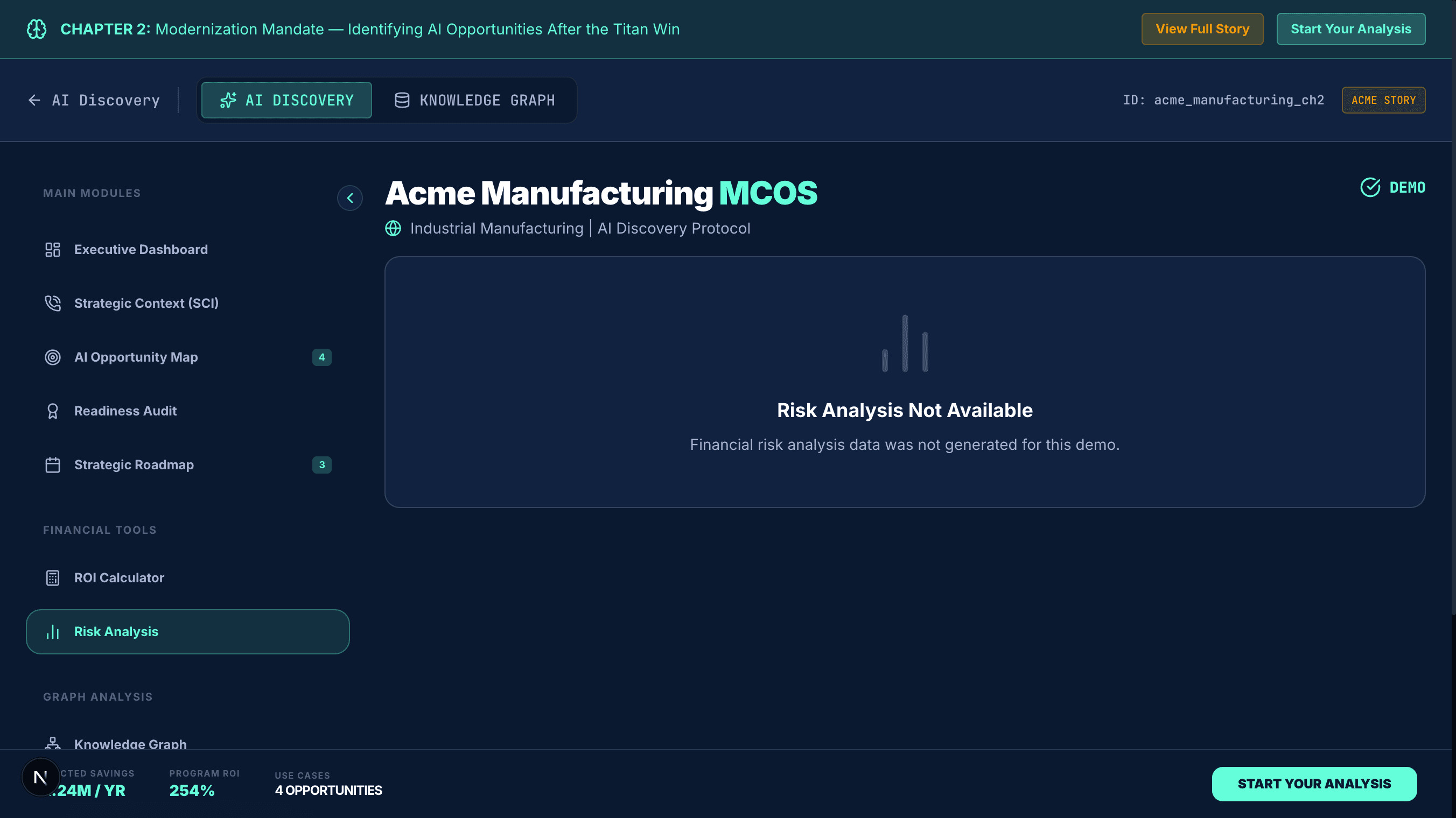
The protocol surfaces data gaps, process instability, governance constraints, vendor dependencies, and organizational risks that can prevent a promising use case from reaching production.
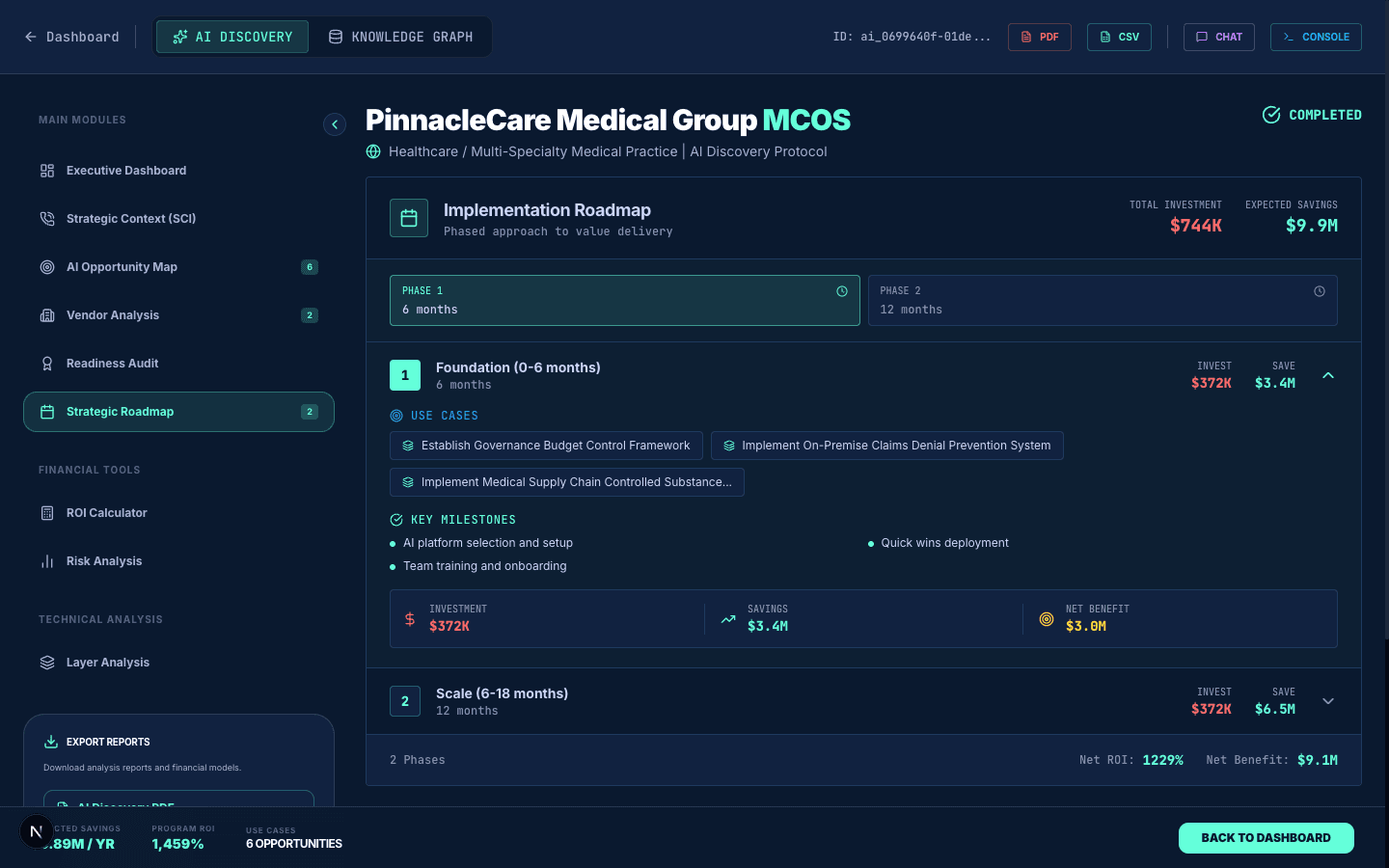
7. Roadmap
The roadmap sequences opportunities according to readiness, dependency, value, and governance—not simply novelty.
8. Executive outputs
AI Discovery supports executive briefings for:
A downloadable Markdown brief is available as the portable executive artifact. A 12-slide PowerPoint deck is not part of the current standard deliverable.
9. Institutional memory
Validated findings can write back into the knowledge layer so later protocols can reuse the evidence, decisions, owners, and constraints rather than rediscovering them from scratch.
Need help? Contact [email protected].