
Sales Call Intelligence
Version: 4.0
Last Updated: August 7, 2026
Sales Call Intelligence converts buyer conversations into a source-grounded operating picture of the deal. Every material figure and finding should trace back to the call record rather than a generic benchmark.
1. Best input
Use a full sales call recording, transcript, or pasted conversation with clear speaker attribution. Discovery calls, technical reviews, pricing discussions, stakeholder meetings, and negotiations all work well.
Supported inputs include audio/video, PDF/text transcripts, and pasted text. The richer the source record, the more complete the stakeholder, financial, and risk picture can be.
2. Executive Snapshot
The Executive Snapshot is the landing view for the deal. It summarizes qualification, the most important pains, and the overall readiness / confidence posture without separating the user from the evidence behind those conclusions.
Key anchors include:
3. Stakeholder Map
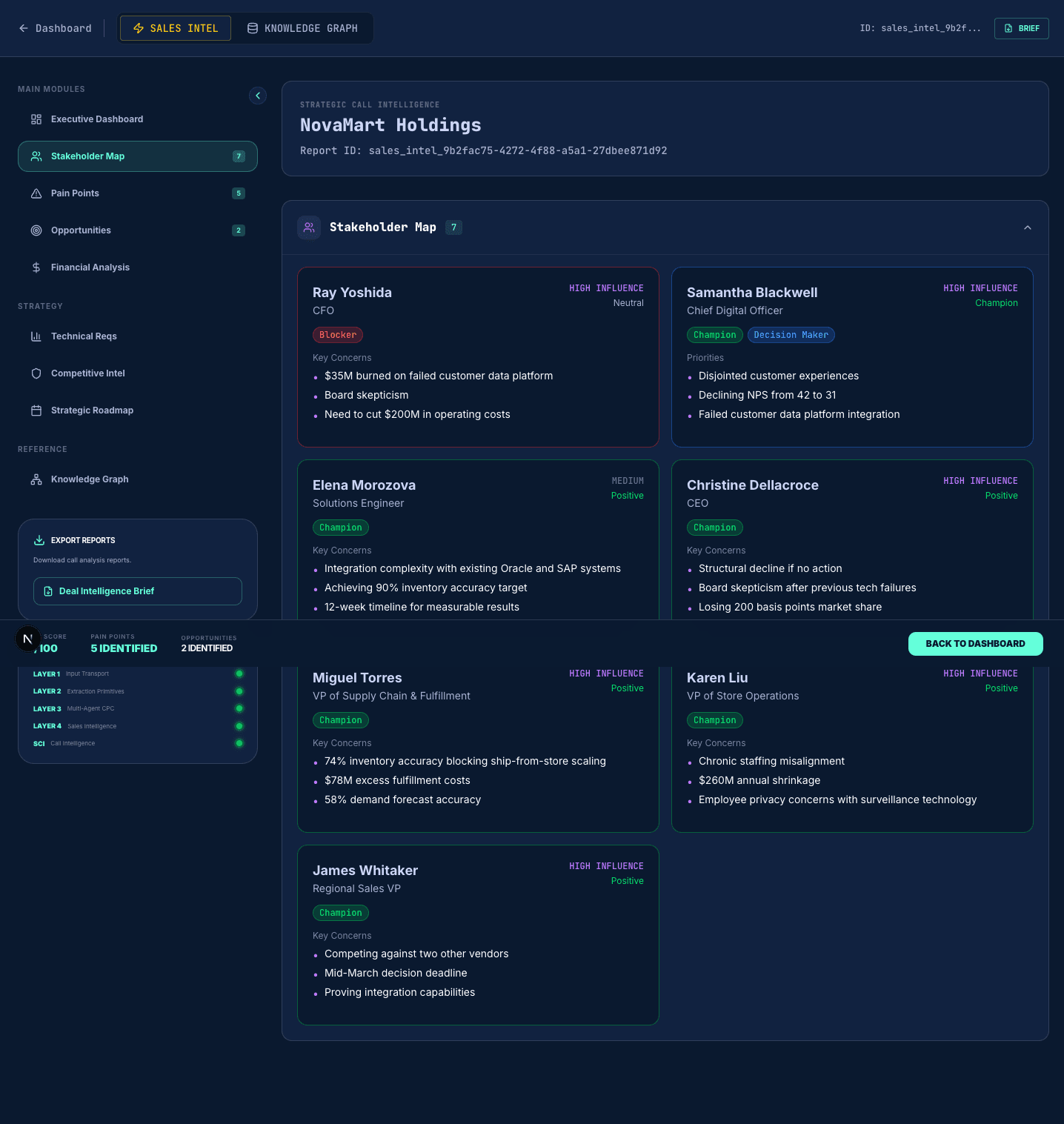
The Stakeholder Map shows the buying committee as a relationship system rather than a contact list.
It captures:
4. Financial Truth
Financial Truth separates sourced financial facts from interpretation.
It can include:
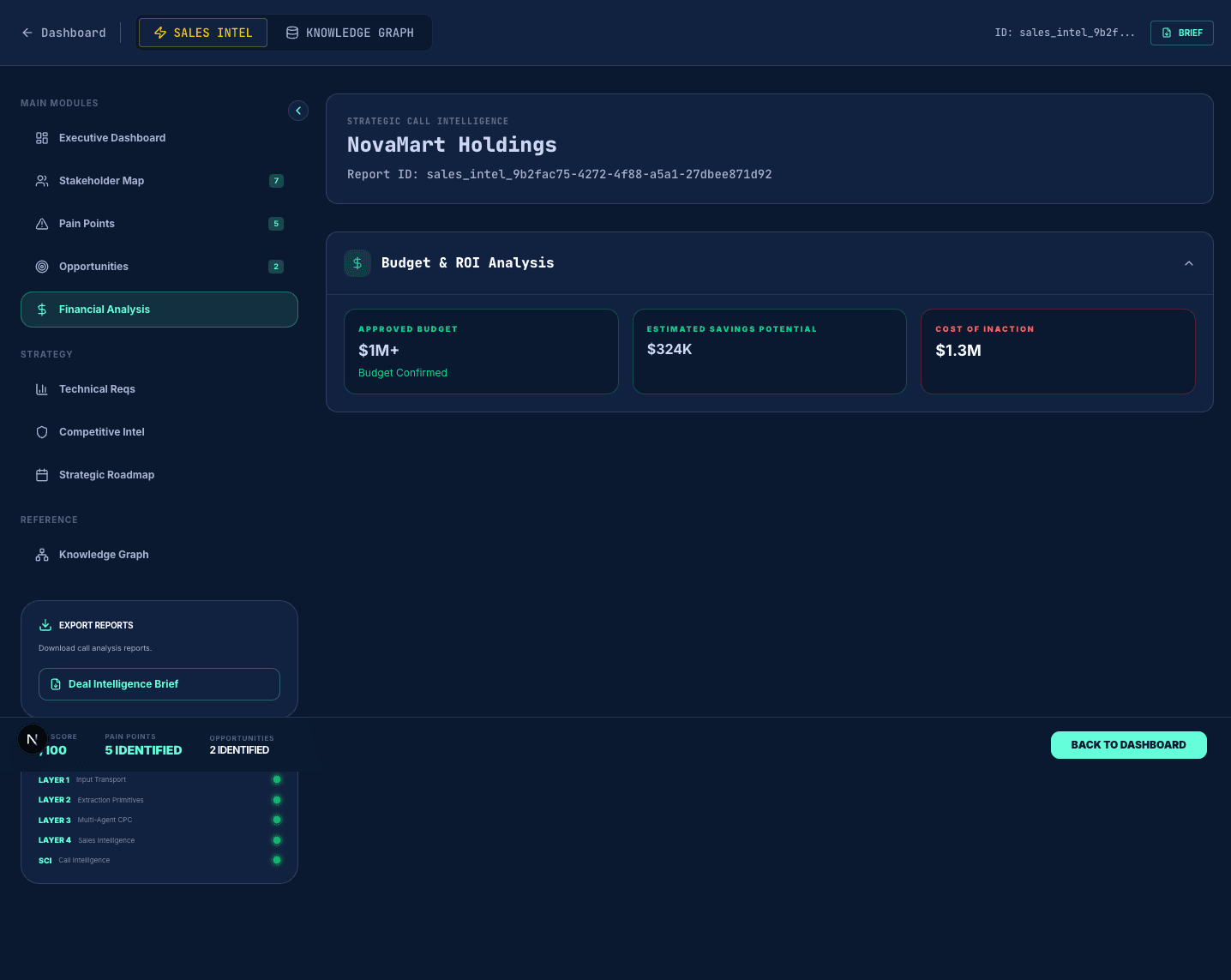
Protected or at-risk existing revenue is not counted as savings or used to inflate ROI.
5. Pain Points
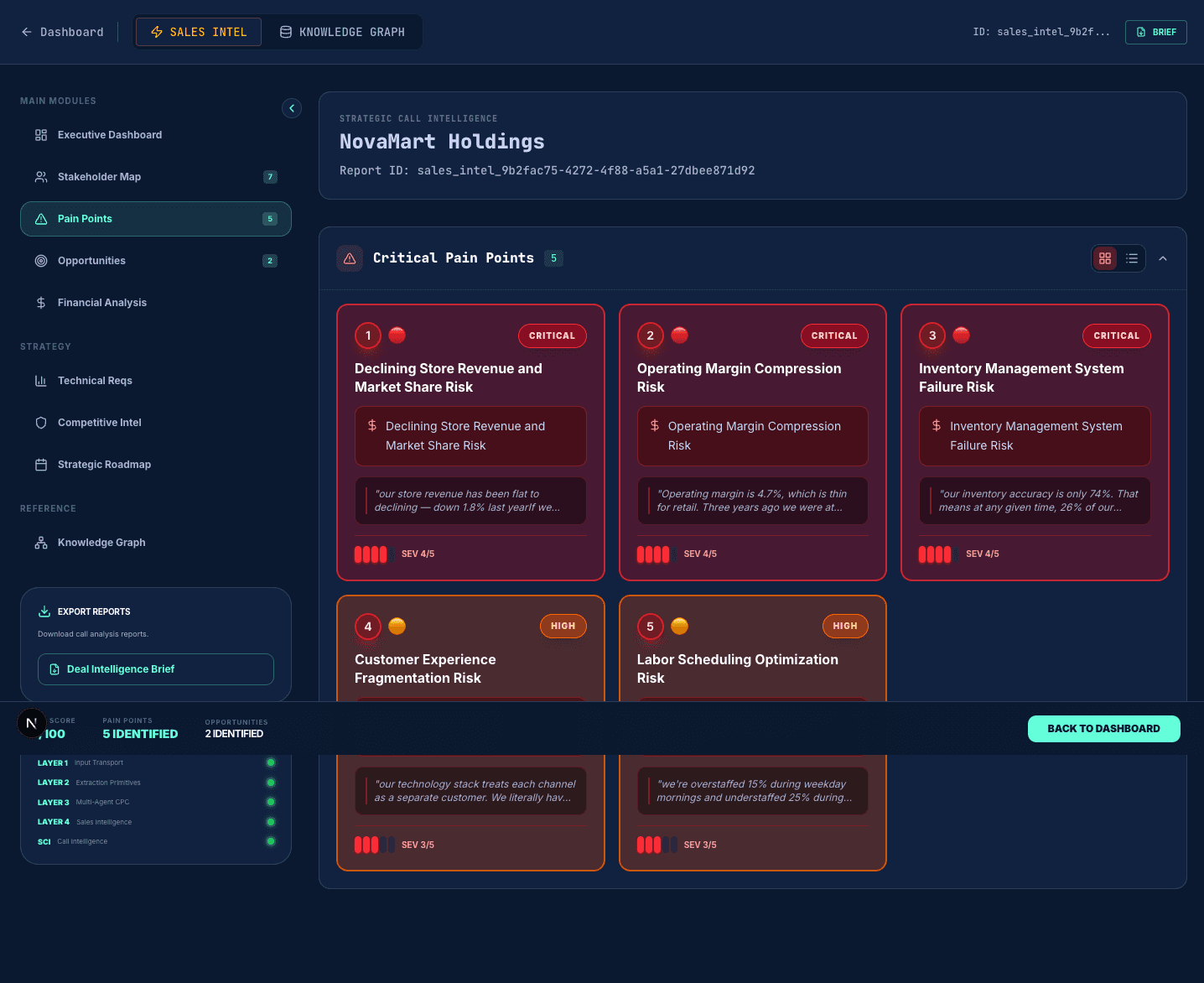
Pain Points consolidates the strongest buyer problems into one evidence view. The highest-priority items are called out first, with supporting quotes and financial impact where the conversation provides them.
6. Risk Watch
Risk Watch is the consolidated risk surface. It brings together the issues that can slow or derail the deal, including:
This replaces the older standalone Competitive Intelligence presentation.
7. Timeline & Urgency
Timeline & Urgency reconstructs decision timing from the conversation: deadlines, implementation windows, procurement gates, renewal dates, and urgency signals.
Use this view to distinguish a real deadline from general buyer interest.
8. Action Brief & Decision Trail
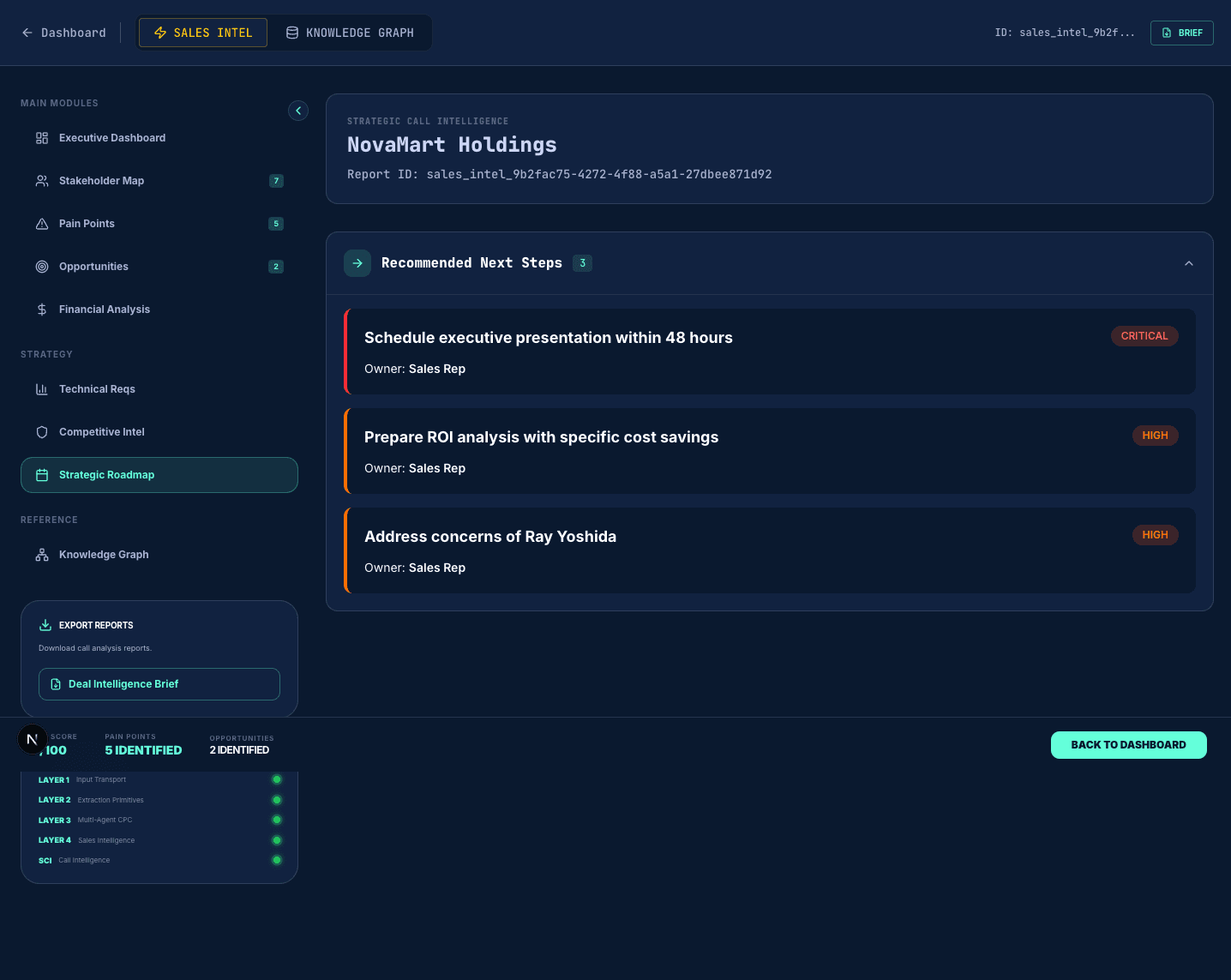
The final operating view turns the grounded record into next actions while retaining provenance.
Typical actions include:
Every generated draft should remain constrained to the sourced deal record.
9. Multi-call deals
Additional calls can extend the same deal record. New evidence should update the stakeholder, financial, risk, and timeline views without erasing prior provenance.
The goal is a cumulative decision record, not a pile of disconnected call summaries.
10. Evidence and exports
Available outputs depend on the workspace configuration, but can include:
The durable asset is the evidence trail connecting the recommendation back to the buyer's own words.
Need help? Contact [email protected].