
Key Personnel Audit
Version: 4.0
Last Updated: August 7, 2026
Key Personnel Audit captures the operating knowledge concentrated in a founder, executive, Director, VP, technical lead, or other critical employee before a transition makes that knowledge difficult to recover.
1. When to run it
Common trigger events include:
The protocol is not limited to business owners.
2. What the audit captures
The audit focuses on six operating layers:
3. Source collection
Use the departing person's interview plus the evidence that supports how the role actually operates:
4. Decision logic
The goal is to capture how decisions are actually made—not only the person's formal responsibilities.
Examples include approval thresholds, exceptions, escalation logic, historical constraints, and the reasons certain workarounds exist.
5. Relationship and dependency map
Map the internal and external relationships that depend on the individual: customers, vendors, peers, approvers, technical experts, regulators, and informal influencers.
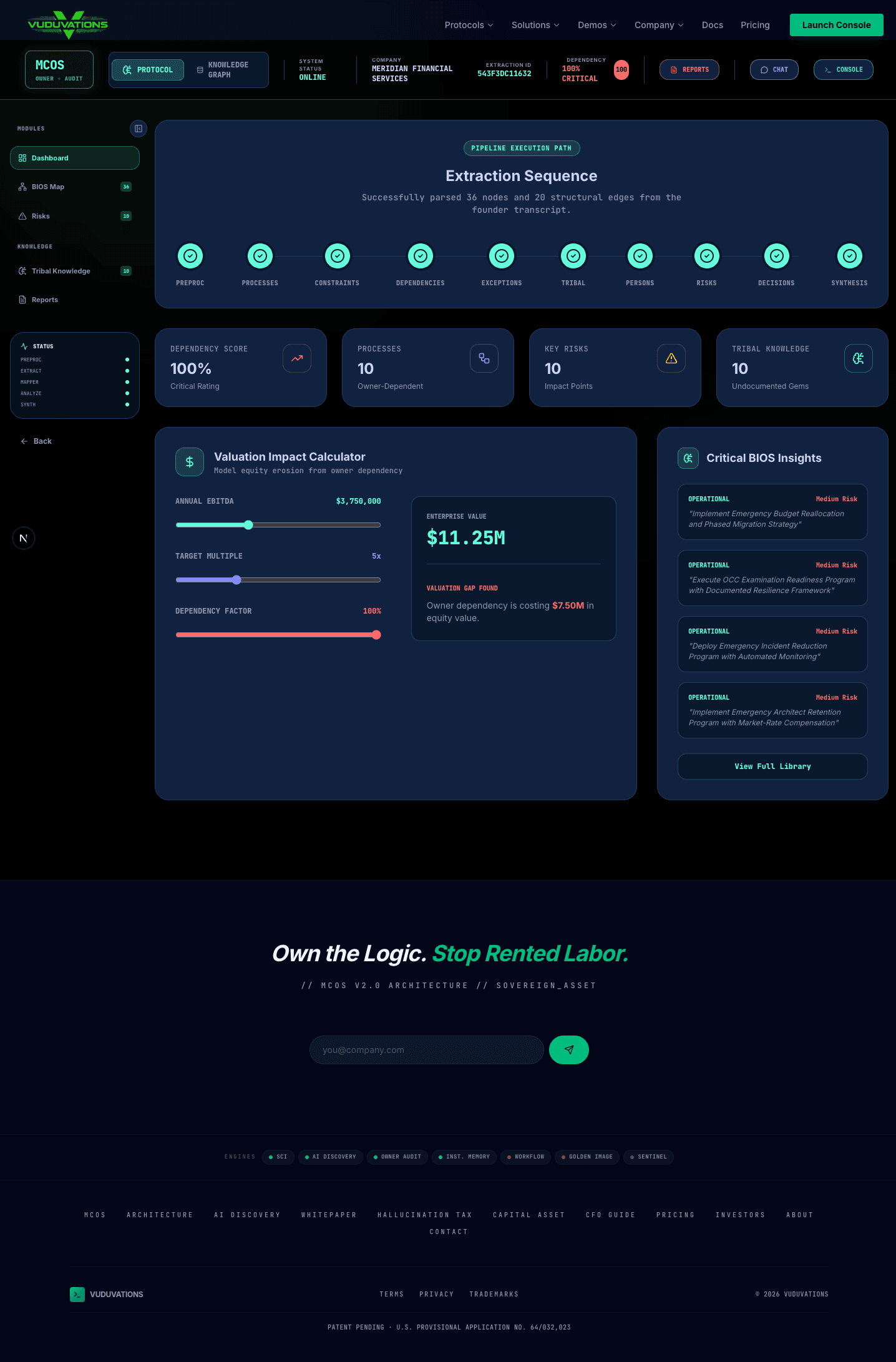
6. Single points of failure
A dependency becomes material when the organization has no practical backup, no validated documentation, no successor, or no alternate authority path.
The audit should distinguish:
7. Transition Record
The organization keeps a Key Personnel Transition Record containing the validated knowledge and transfer actions.
Typical contents include:
8. Institutional memory
The audit is not complete when a PDF is delivered. Validated knowledge can be retained in institutional memory so the successor and future workflows can query and extend the operating record.
Need help? Contact [email protected].